Mythology · 04
The Seers
Before priests, Finland had seers — men and women who knew the words, spells and rhythms. Among them walked shamans who travelled to the spirit world, and shape-shifters who took the power of animals.
MythologyWhat the old tales tell
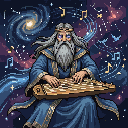
The seer was the village's wise one — a healer, a mediator between people and the spirit world. They knew the power of plants and could sing sickness away. Väinämöinen in the Kalevala sang mountains into motion and built a boat with his song. The seer was not a magician — they were the one who knew the secret places of the world and knew how to speak to them.
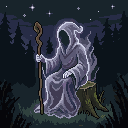

The power of the word was the seer's weapon. A correctly spoken song healed wounds, opened locks and turned the enemy's blade. Väinämöinen sang Joukahainen into a swamp and built a boat with his song without a single nail. Song was not beauty — it was deeds that changed the world.
The noaidi, the seer of Sámi tradition, used the drum and travelled in trance between this world and the other. The drum's pattern was a map, the rhythm was a boat, and the noaidi walked between worlds to seek knowledge, heal the sick or negotiate with the dead. As Christianity spread, drums were burned and noaidis persecuted.
The seer could take the shape of an animal. The bear gave strength that broke stone. The elk gave speed that carried through snow. The bird's wings lifted to the lands of spirits. Shape-shifting was not magic but knowledge — whoever knew the animal's heart also gained its body. The Druid in the game is an interpretation of this tradition.
The bear was sacred, and it was not spoken aloud. Euphemisms sufficed: Otso, mesikämmen, kontio. Killing a bear required a ritual, but more is told in the Animals article. The seer honoured the bear as a brother, not prey.
When Christianity came, the time of the seers ended. Their songs were forbidden, drums burned, and the power of the word transferred to church liturgy. But in villages spells were still whispered to heal cattle and protect homes. The seer did not disappear — they grew silent.
In the game worldHow this appears in The Darkened Northern Lights
Wäinö (Väinämöinen) lives in the castle as an old seer. He plays his kantele day and night to keep the light alive through its tones. He guides: 'Find the lost foxes. When they unite, the darkness will not withstand their glow.'
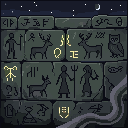
Shamsa is a shaman from Lintukoto. He sees the world as 'an interrupted dream' and joins the company in the final stages. 'Lintukoto sends its greetings,' he says in the finale.
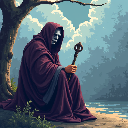
The Druid is a playable character with three forms: human, bear (rock-hard strength), elk (speed and endurance). At night the bear lowers its head against Kipinä's foot — a promise of protection without words.
Wäinö
Druid
Bear form
Elk form
Related articles


Experience this in the game —
Download The Darkened Northern Lights